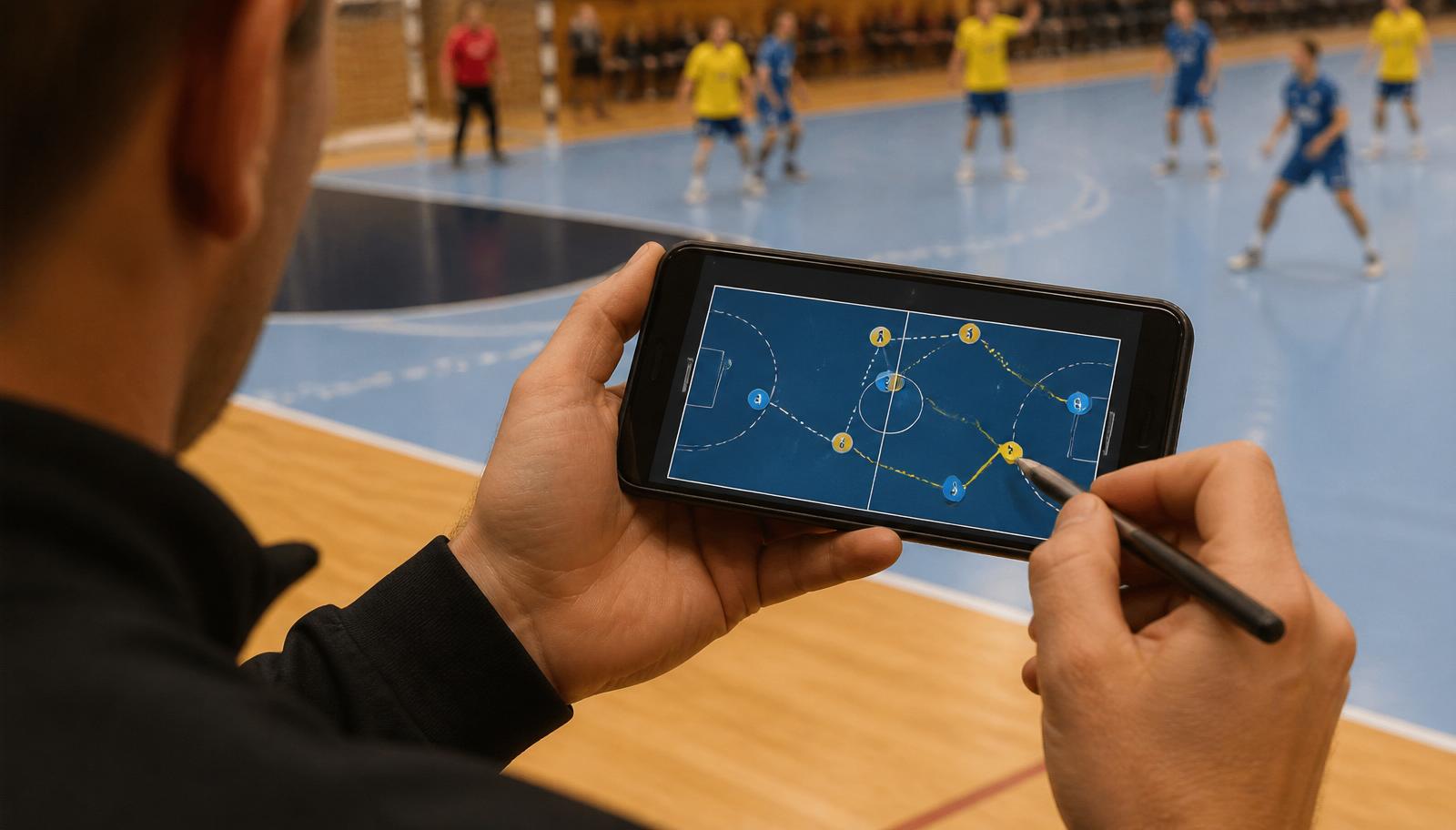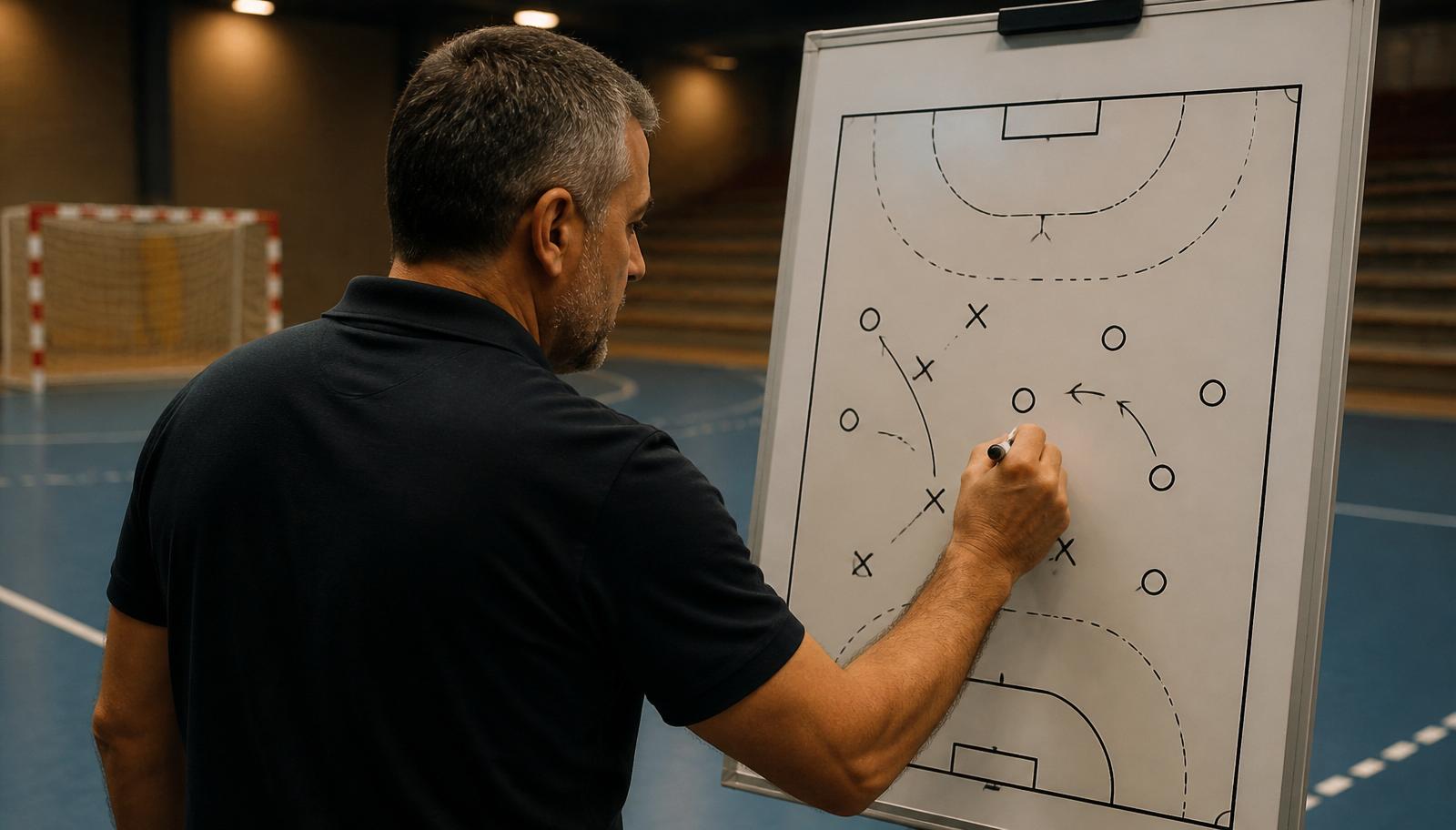
SquadX began with a problem that had nothing to do with software. One of the most complete handball methods we had ever worked with existed almost entirely in one person's head. Its author, Gintaras Savukynas, had spent more than twenty years on the bench refining it. He could look at a squad, a calendar, and the next two matches and know how the coming weeks should be shaped. But the moment that knowledge had to leave his head and reach another coach, it became hours of explanation and a folder of files no one else could follow. The method worked. It just did not travel.
A method that lived in one place
Savukynas is an EHF Master Coach. He has led the Lithuania national team, won three consecutive trebles with Riihimäen Cocks, reached the EHF Champions League with both Cocks and HC Motor Zaporizhzhia, and today coaches Bergsøy IL in Norway's Eliteserien. The method is proven.
That was exactly the problem. A method that only produces results when one specific person is in the room cannot spread. It stays locked to him, and to the files only he can read. As he puts it: "For twenty years this system lived in my head. SquadX is the first time it lives outside it."
We did not start SquadX to add another tool to a coach's week. We started it to take a way of coaching that had been trapped inside experience and notebooks and make it something another coach could open and run.
It was never just one coach
The same gap runs through every level of handball, in a less visible form. The sport has become very good at collecting information and much slower at helping coaches act on it.
At the top of the game this is plain to see. Player and ball tracking now runs across entire leagues, and the sport's governing bodies have committed to it for years to come. Match analysis, workload monitoring, and automated video are no longer exotic. The first wave of technology made the game more visible than it has ever been.
Being able to see the game is only the first step. It does not plan Tuesday's session, account for the two players who are unavailable this week, or know that the next opponent defends with an aggressive 5-1. Someone still has to connect all of it, and that someone is the coach.
The coach is the integration layer. They hold the calendar, player availability, the last match, physical load, the drill library, and the methodology at once, usually across several disconnected tools, and turn all of it into the next decision. The amount of information kept growing, while the work of connecting it stayed exactly as hard.
Youth coaches carry the most alone
An elite club spreads this work across people: a head coach, an assistant, an analyst, performance and medical staff. The staff itself is, in effect, a system for processing information.
A youth coach has none of that. One person plans the week, prepares sessions, analyses matches, manages attendance, talks to parents, and is still expected to develop players to a standard the whole club is judged by. They face elite-level complexity with none of the elite-level support.
This is the coach we built SquadX for first. Not because they know less, but because they carry more alone.
Why a generic AI was not the answer
By the time we started, anyone could ask a general AI model to write a training plan, and it would return something fluent in seconds. That is the trap. Fluency is easy to mistake for judgement.
A general model only sees the prompt in front of it, never the process behind a real coaching decision. It will produce a four-week plan that repeats itself, tapers wrong before a match, prescribes drills for a squad size you do not have, and ignores the methodology completely, because it has no idea those constraints exist.
A real coaching system has to see what the coach sees: the team, the calendar, the history, the constraints, and the method. And it has to hold three limits that never move:
- The method is the expert. The periodization and the drills come from an EHF Master Coach. The system applies that framework. It did not write it.
- The coach decides. The system drafts, suggests, and prepares. The coach reviews, edits, and commits. Nothing ships without approval.
- It removes busywork, not judgement. It assembles, maps, and reminds, so the coach spends time coaching rather than administrating.
What we built
SquadX is one system, not a set of tools to assemble. It holds the plan, the drills, the player profiles, the analytics, and the match-day loop in one place, built on a single methodology instead of stitched together from generic content.
Coach Lucas is the assistant coach inside it. Lucas reads the plan, the players, and the results, then surfaces what to adjust, who to watch, and where the load is off. Lucas prepares the work and the coach makes the call. The method stays the coach's, and so does every final decision.
The method is the expert. The coach decides. AI removes busywork, not judgement.
That line is the whole product in one sentence. Everything we build has to pass it.
Where to start
The first thing SquadX does for a coach is the task that takes the most time and the least judgement: building a pre-season. It gives you a phased plan from base to match-ready, so you adjust an expert structure instead of starting from a blank page.
That is the place to begin.
Start your pre-season. Free. → /signup
Related reading
- AI Has Already Entered Handball — where AI actually works in the sport today, and where it does not. → /blog/ai-in-handball
- Inside SquadX — one system, and the seven things it does for a coach. → /product
- What Is a Match Cycle and Why It Matters → /blog/what-is-a-match-cycle
About the method
SquadX is built on the methodology of Gintaras Savukynas, co-founder of SquadX and head coach of Bergsøy IL in Norway's Eliteserien. An EHF Master Coach with over twenty years on the bench, he has led the Lithuania national team, won three consecutive trebles with Riihimäen Cocks, and reached the EHF Champions League with both Cocks and HC Motor Zaporizhzhia.