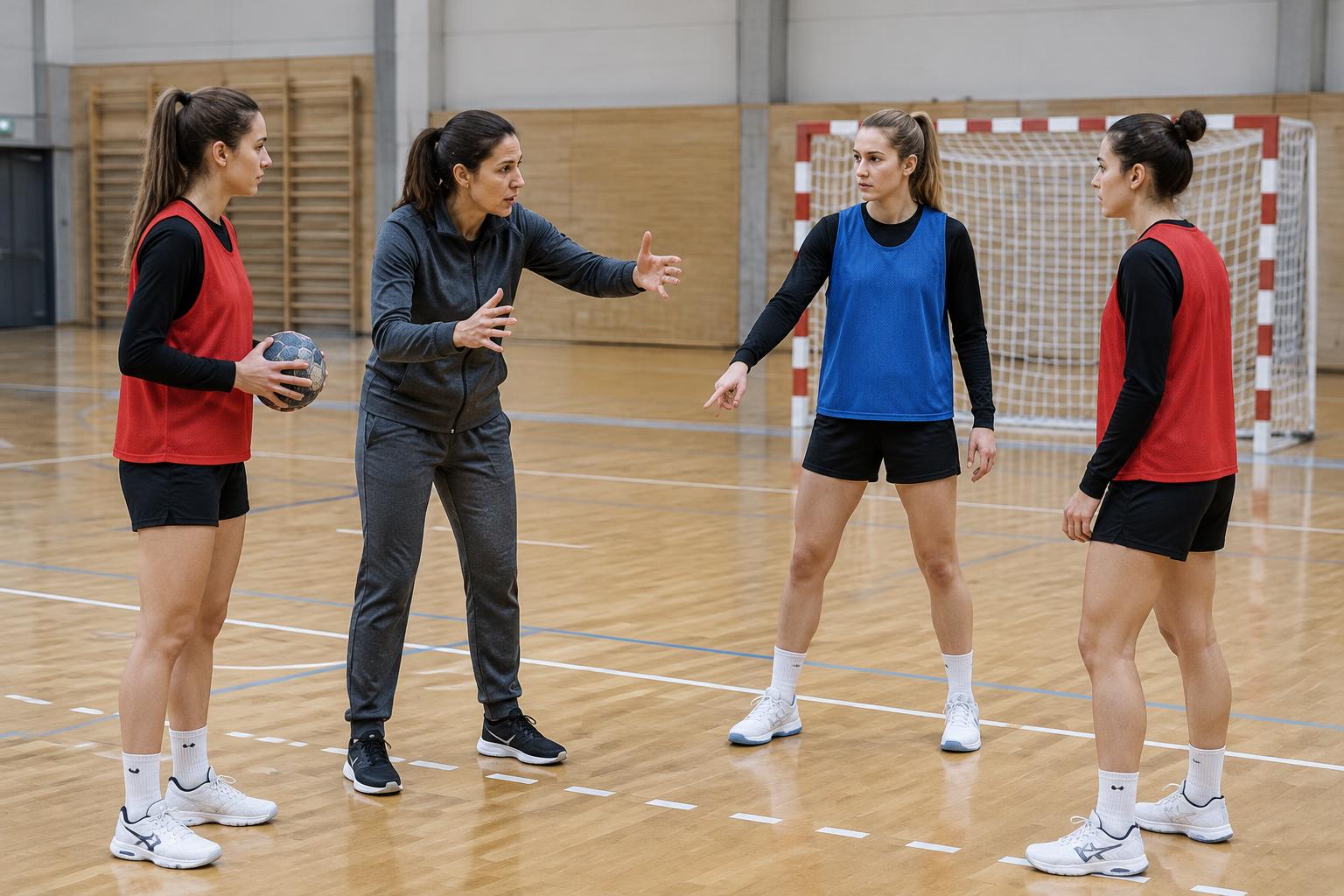
Two players walk into Thursday's session looking the same. One slept five hours because of exams and still has heavy legs from Tuesday. The other feels fine. From the sideline you cannot tell them apart until the first hard drill goes wrong.
A short wellness questionnaire is the cheapest way to tell them apart before the session starts.
What a wellness questionnaire measures
A widely used version asks five things, each rated from 1 to 5: fatigue, sleep quality, muscle soreness, stress and mood. The format comes from a study in professional rugby league (McLean et al., 2010), and World Rugby's coaching material uses the same five items. It adapts easily to handball.
That study also shows why the questions are worth asking. In the 12 players followed, perceived fatigue, overall wellbeing and muscle soreness were worse for at least 48 hours after a match, while jump performance and perceived fatigue were back near normal within about four days. Handball is a different sport, but the timing is a useful guide: after a Saturday match, Monday falls inside that window, and Tuesday may still be for some players.
Players' own ratings are also more sensitive than they look. A systematic review of 56 studies found that athletes' self-reported measures responded to changes in training more consistently than commonly used objective markers (Saw, Main and Gastin, 2016).
The template
| Question | 5 | 3 | 1 |
|---|---|---|---|
| How fresh do you feel? | Very fresh | Normal | Exhausted |
| How did you sleep? | Very well | Normal | Barely slept |
| How sore are your muscles? | Not sore | Normal | Very sore |
| How stressed are you? | Very relaxed | Normal | Very stressed |
| How is your mood? | Very good | Normal | Low or irritable |
Players can pick 2 and 4 as well. Add the five answers for a total between 5 and 25.
Add one question outside the score: Is anything hurting? No, a bit, or yes, with where. Pain, for example in a shoulder, knee or ankle, deserves separate attention from a tired morning.
When to ask
Ask before the session, while you can still change it. On training days that means the morning or early afternoon. On match days, a few hours before throw-off. Keep it under a minute, or the answers stop coming.
How to read the answers
Compare each player with their own normal
Some players always answer 3, others always answer 5. After three or four weeks every player has a baseline. A drop of several points from their usual total means more than a low total from a player who always scores low.
Read single items, not only the total
A player with sleep at 1 and everything else normal needs a different conversation from a player with soreness and fatigue both at 1. The total hides that difference.
Look at the team as well
If half the squad drops on the same day, the cause is usually on the calendar: a long trip, two matches in four days, school exams. That is a planning question rather than a player question.
A single low morning is worth a question. Two in a row, or any answer about pain, is worth a change to the plan.
What to do with a low score
Talk first
Ask the player what is behind the number before you change anything. Sometimes it is a bad night. Sometimes it is something that will last weeks.
Adjust the session and keep the player training
A lighter role in the contact drills or a shorter session keeps the player training. Using low scores against players in selection is a quick way to make sure nobody answers honestly again.
Send pain to someone qualified
A coach's job with pain is to notice it and refer it. Persistent pain belongs with a physiotherapist or doctor.
Getting honest answers
Players answer honestly when three things hold. Their answers are private. They see that the answers change something, even if it is only a word before the warm-up. And they never pay for an honest bad score. The article on what players don't say in the locker room goes deeper into why the setting matters.
For youth teams
From about U14, most players have their own phone and can answer for themselves. With younger teams, keep it to two or three questions and expect parents to be the first source. Watch exam periods: sleep and stress scores often move before anything shows on court.
Where SquadX fits
Before every match, players answer a short check-in in the SquadX player app covering readiness, sleep and mood, and they can flag soreness, pain or illness. Coach Lucas puts the answers into a pre-match brief, so you know who to check before the warm-up.
Quick answers