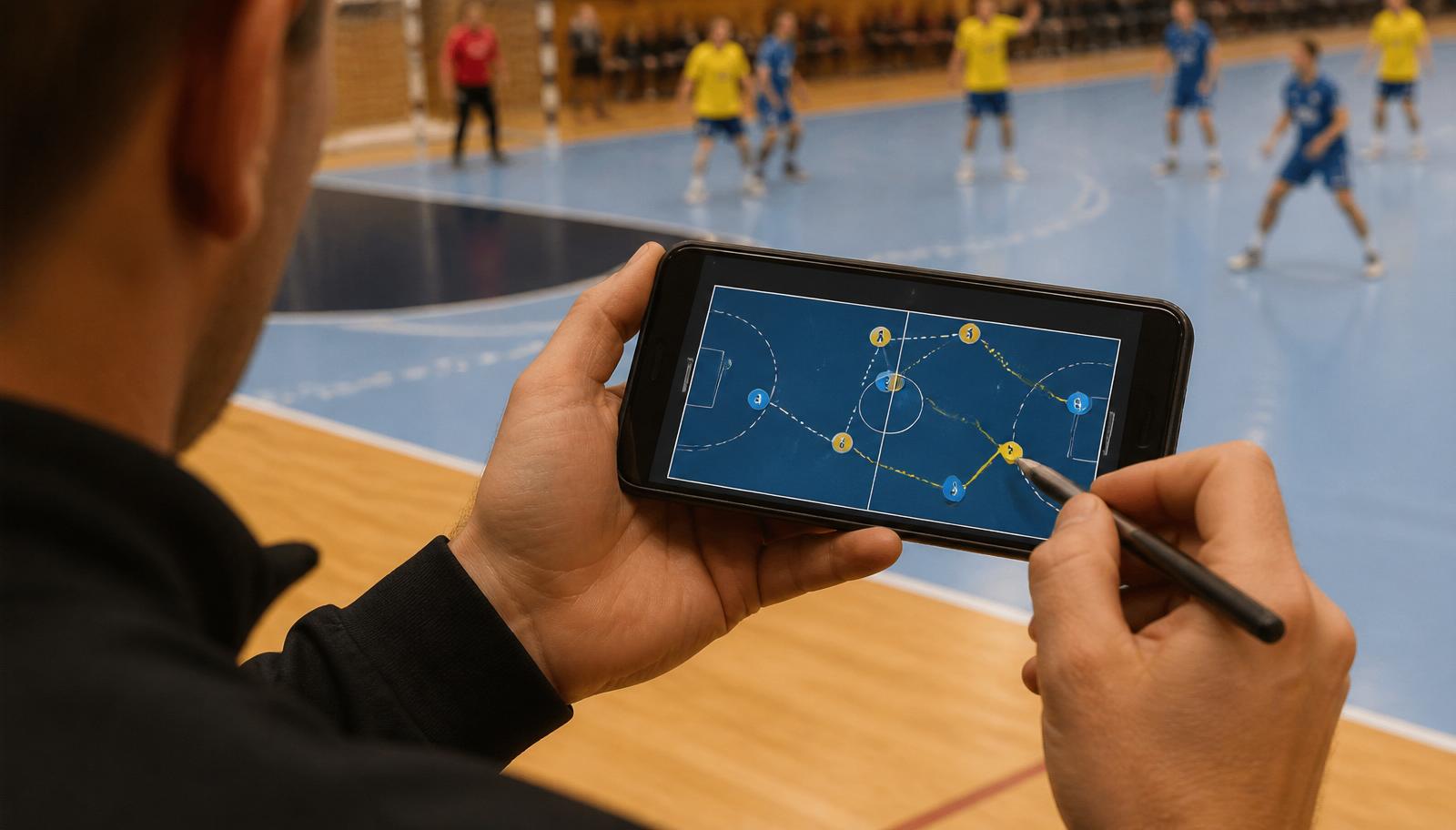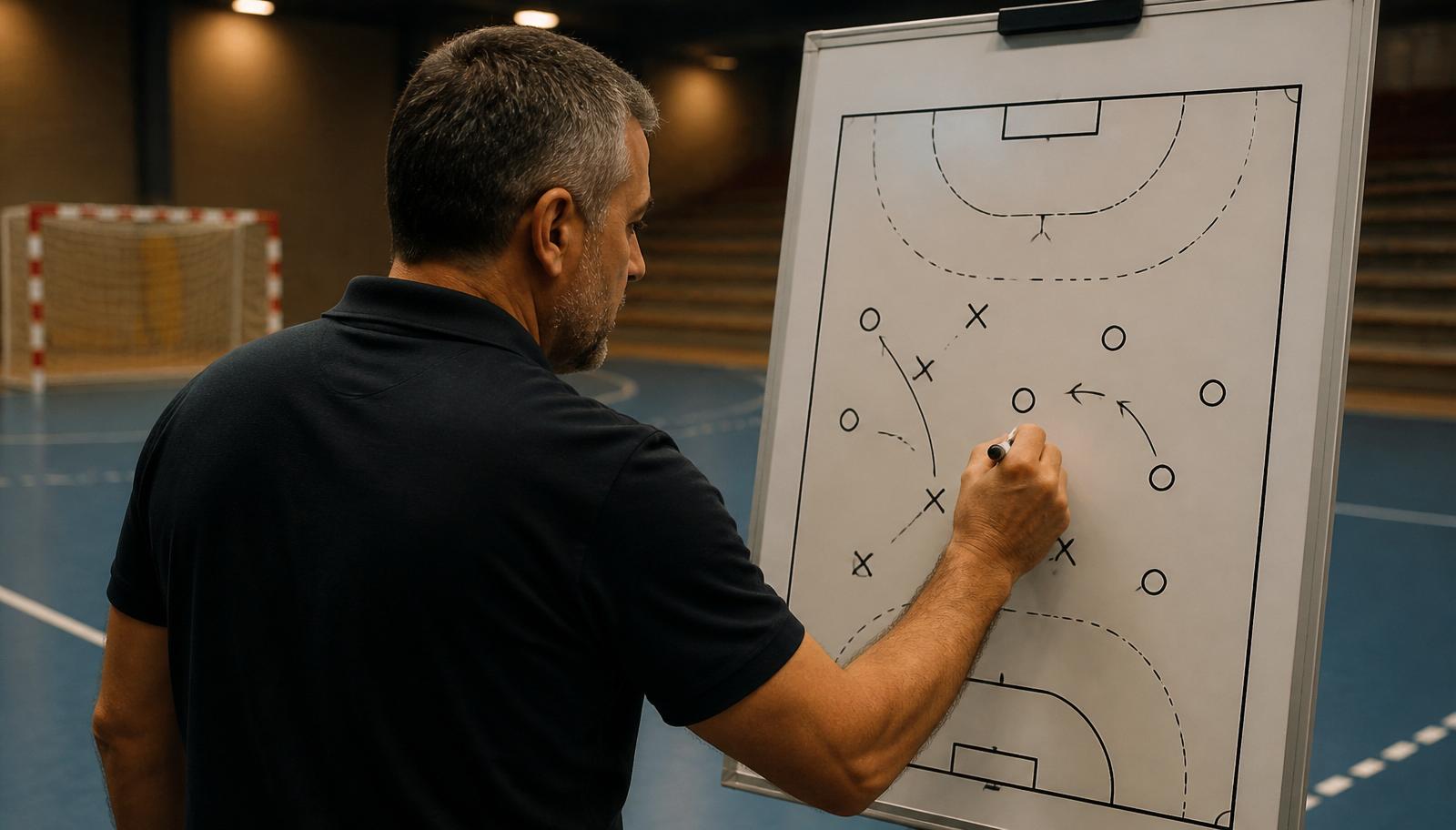
Every coach knows the rhythm of a season: train, play, repeat. Inside that rhythm sits a smaller unit most coaches never name, even though it decides the quality of everything they do. It is the match cycle.

What a match cycle is
A match cycle is the full loop from one match to the next. It includes everything between two games: not only the training sessions, but the decisions, reflections, and adjustments that connect them.
A typical cycle looks like this:
- Before the match: assess readiness, finalize the lineup, set role expectations, define an execution focus.
- The match: observe, adjust, coach.
- After the match: reflect, individually and as a team. What worked, what did not, why.
- Between matches: interpret the signals, set two or three training priorities, run sessions that address them, prepare for the next match.
- Next match: check whether the priorities improved, then begin again.
One loop. The match cycle is the smallest repeating unit of coaching improvement.
Why thinking in cycles changes your coaching
Most coaches plan in sessions or weeks. "Tuesday defense, Thursday transition, Saturday we play." That is a schedule. A schedule tells you when you train, not why.
When you think in match cycles, planning becomes purposeful. Every session exists because of something observed in the last match and is built to improve something measurable in the next one. There is a reason behind every drill, every focus, every minute. The shift from "what should we train?" to "what did we learn, and what are we improving?" is the difference between activity and progress.
The five phases
Phase 1: Signals
Before the match you need the real state of the team, not what you assume: energy, focus, stress, body readiness, confidence. This is data you collect, not data you guess. After the match you need structured reflection, specific information about role execution, decision quality, communication, and effort, from both the coach and the players.
Phase 2: Meaning
Raw signals are noise until you interpret them. This phase is filtering. Out of everything that happened, what actually matters? A player who rated focus at 2 and then made three critical turnovers is a pattern worth noting. A player who rated confidence high but had his worst shooting game of the season is a signal that confidence is not the issue, and maybe shot selection is. Most matches produce a lot of data. Only a few points matter for the next cycle.
Phase 3: Decisions
This is where most coaches struggle, not because they cannot decide, but because they try to fix everything at once. A good cycle produces two or three clear priorities. Not eight. Not "we need to be better." Two or three specific, actionable focus areas the next training block can realistically address. Limiting yourself to three forces you to choose which three will matter most, and that choice is itself better coaching.
Phase 4: Training actions
With clear priorities, training design gets straightforward. You know why you run each drill and what you are looking for, and you can tell players the focus and the reason, which raises buy-in and effort. If the priority is "improve defensive switching communication," every drill and game situation should create chances to practice exactly that.
Phase 5: Next check
The cycle closes when you check whether the training worked. In the next match, did the priority improve? Did the switching communication get better? Did the red-flagged player's focus lift? Without the check, training is an act of faith. With the check, training is an experiment, and every experiment produces learning.
A season is not one long project. It is twenty or thirty small experiments, each one a match cycle, each one a chance to be slightly more right than last week.
What happens when you don't think in cycles
Without the framework, coaching becomes reactive. You train what feels important. You plan by tradition ("we always do fitness on Mondays"). You reflect when there is time, which often means you do not. Improvement then happens by accident: a player improves because he is talented, the team improves because the schedule eased. There is no mechanism driving progress.
I have seen this at every level, from youth clubs to professional teams. The coaches who improve their teams consistently are not always the ones with the most knowledge or the best players. They are the ones with a reliable process for learning from each match and applying it to the next.
Making it practical
You do not need software to think in cycles. You need three things: a consistent way to collect signals before and after matches, a disciplined way to filter them into two or three priorities, and the habit of checking results in the next match. The medium matters less than the consistency.
Where SquadX helps is by taking the friction out of the loop. Readiness checks and post-match feedback collect the signals. Lucas reads across the plan, the players, and the results, and surfaces what matters and what to adjust, so the meaning and decision phases are fast instead of a Sunday-night chore. The plan, sessions, and drills handle the training actions, and the next match closes the check. The framework is bigger than any tool, but the tool is what keeps the loop running when the season gets heavy.
You are already inside a match cycle right now. The next one starts at your next game.
Build your match cycle in SquadX →
Gintaras Savukynas is co-founder of SquadX and head coach of Bergsøy IL in Norway's Eliteserien. An EHF Master Coach with over 20 years on the bench, he has led the Lithuania national team, won three consecutive trebles with Riihimäen Cocks, and reached the EHF Champions League with both Cocks and HC Motor Zaporizhzhia. SquadX is built on his methodology.