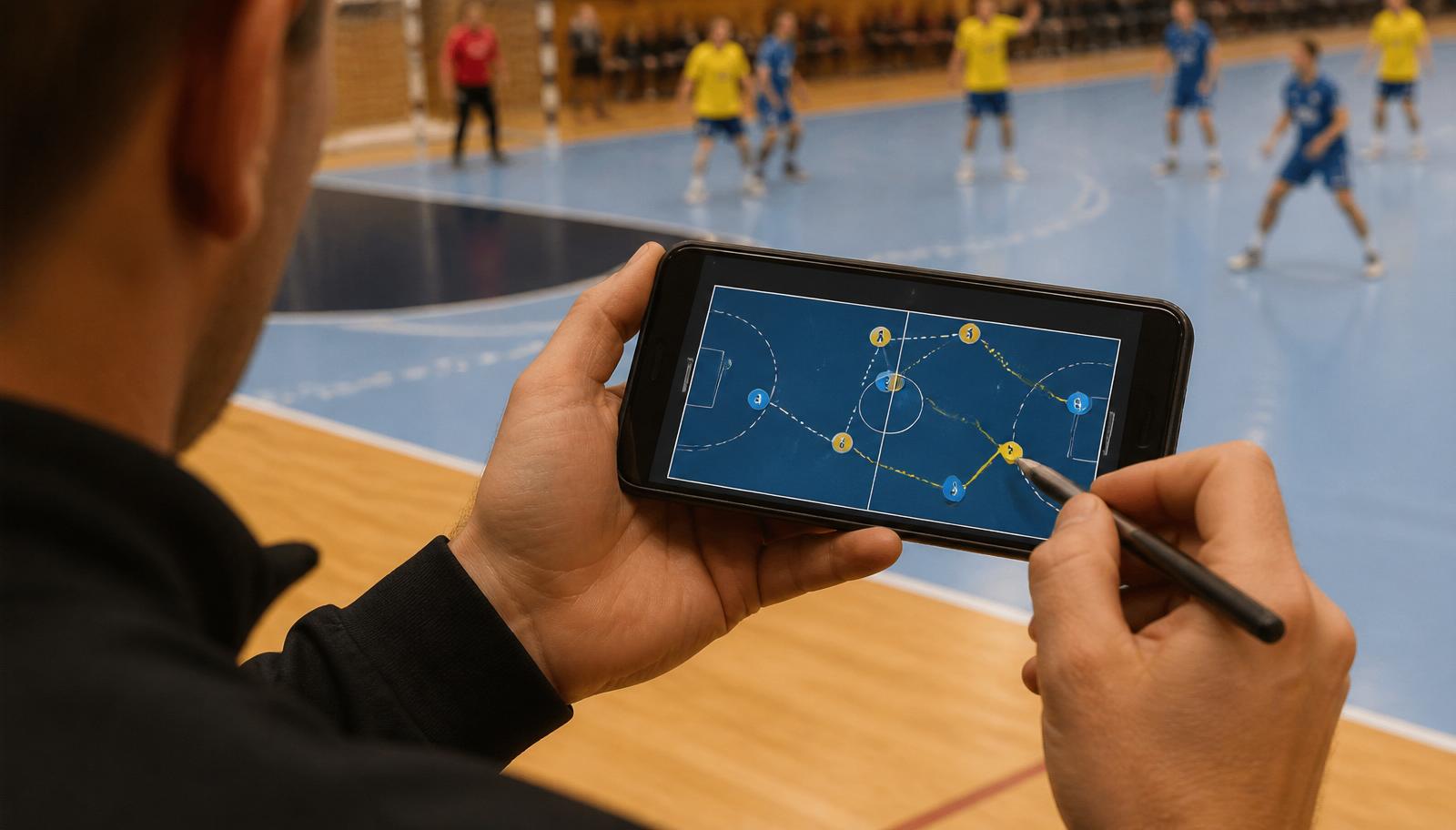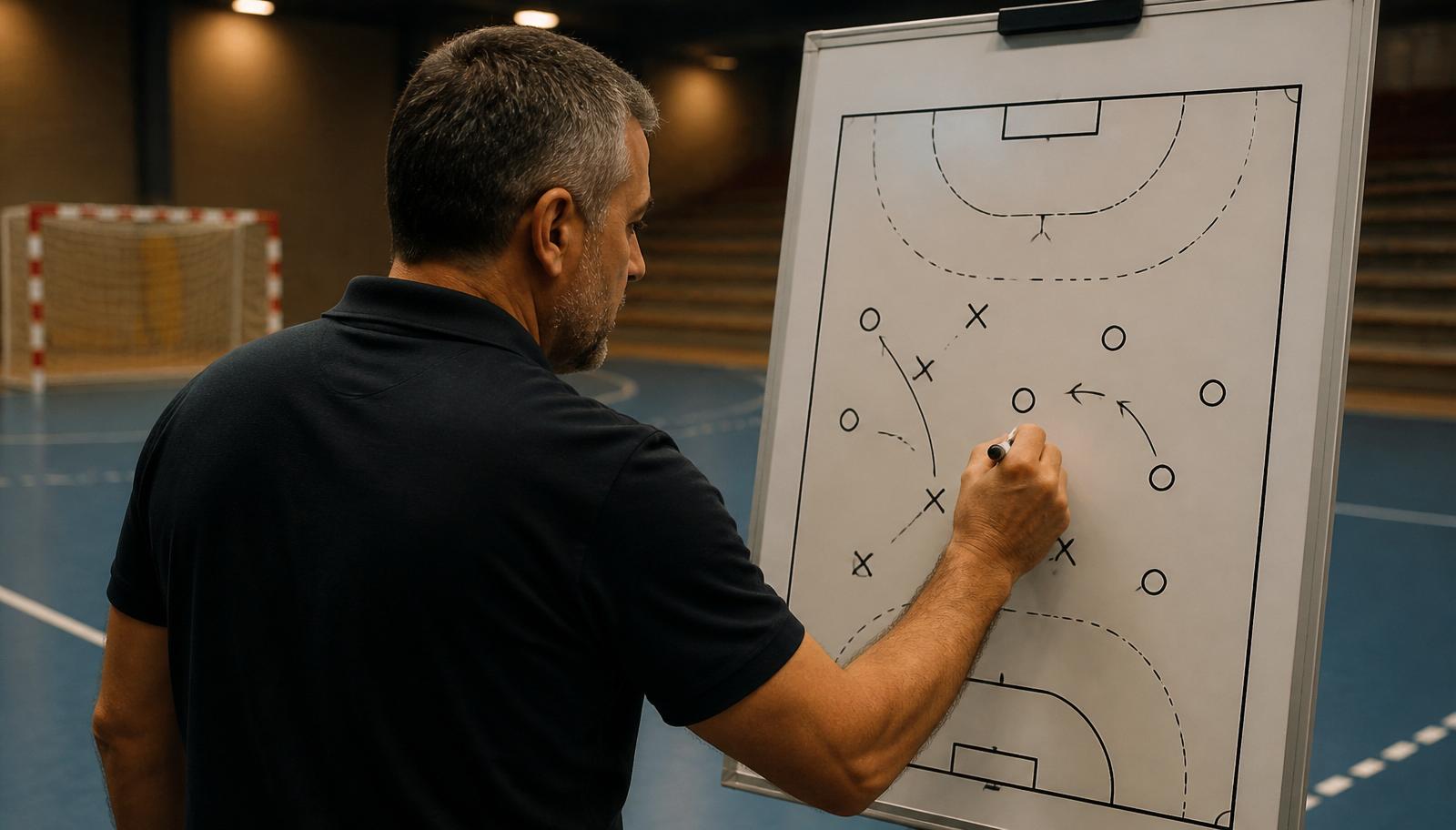
Saturday night after a loss. The bus is quiet. You are replaying the match: the missed shots, the turnovers in transition, the defensive breakdown in the last five minutes. By the time you get home you have decided the team cannot handle pressure, and Monday will be about mental toughness and defensive discipline.
You might be wrong, and not about the problems themselves, but about which of them actually matter.

The two biases that distort coaching decisions
Sports psychology has identified two biases that affect coaches after almost every match. They are not exotic, and they happen every week.
Outcome bias is judging the quality of decisions by the result. Win, and the decisions must have been good. Lose, and they must have been bad. Neither is reliable. A well-built game plan can lose. A sloppy performance can beat a weaker opponent. The result is not a measure of process quality.
Recency bias is letting the last ten minutes dominate the memory. A strong first half gets buried under a poor finish. A slow start is forgotten because the team rallied late. Whatever happened most recently feels most important, even when it was not.
Together these biases produce a distorted picture of the match, and that distorted picture is what most coaches use to plan the next week.
What this looks like in practice
I have coached long enough to catch myself doing this, and I still have to fight it. After a loss I used to walk into Monday with eight or ten things that needed fixing. Defense too passive. Transition slow. Shot selection poor. Communication broken. The list felt urgent and complete. When I reviewed the match calmly on Sunday, usually only two or three of those were real, repeated problems. The rest were isolated moments amplified by the loss.
After a win the opposite happened. I would feel good, run a lighter session, skip the reflection. But wins hide problems that only show up in the data, not the scoreboard. A team can win shooting 35% from nine meters. That is not sustainable, and it does not feel like a problem while you are celebrating.
The cost of a biased plan
When training priorities come from emotion instead of evidence, three things follow.
You overreact to single events. One bad transition sequence becomes a week of transition drills, even though transition has been solid for months. You treat a symptom, not a pattern.
You underreact to slow problems. Shot selection declines over three matches, but you are winning, so nobody notices until it costs you a game. By then the habit is set.
And players lose trust in the process. If Monday is punishment after a loss and relief after a win, players learn that the coach's mood, not the team's needs, sets what they practice. Serious players who want to improve regardless of last Saturday's score find that demoralizing.
How to break the cycle
The fix is not to become emotionless, which is neither possible nor useful. The fix is to put a structured buffer between the match and the plan: something that captures information while it is fresh, then presents it in a way that separates emotion from signal.
What works, from experience:
Separate collection from interpretation. Right after the match, collect, do not analyze. Have players reflect on specific questions, role execution, decision quality, effort, communication, within 24 hours while it is fresh. Note your own top observations. Make no training decisions yet.
Look for patterns, not incidents. One bad defensive sequence is an incident. Three matches of declining defensive ratings is a pattern. Patterns earn training time. Incidents usually do not.
Limit yourself to two or three priorities. A plan that addresses eight things addresses nothing. Forcing the top three makes you justify why something belongs there, and that constraint removes most of the bias.
Compare your view with the players'. Coaches and players often see different things. When you and several players independently name the same issue, that is a reliable signal. When only you see it, it might be real, or it might be bias.
Check the previous cycle. Before planning the week, look at last week's priorities. Did the thing you trained improve? If yes, move on. If not, ask why, because maybe it needs another week or a different approach. That keeps the process honest.
The scoreboard is the loudest voice in the room after a match, and the least reliable witness to why you won or lost.
Why knowing is not enough
Most coaches know about these biases and still fall into them, because knowing is not enough. You need a system that makes structured reflection the default, not something that demands extra discipline on a tired Sunday.
That is what SquadX does on match day. It collects player readiness before the game and structured self-reviews after, and Lucas flags the patterns and surfaces two or three suggested priorities from the data, not from how the match felt walking off the court. Even without it, the principle holds: put structure between the match and the plan, and your Monday decisions get better.
Close your match-day loop in SquadX →
Gintaras Savukynas is co-founder of SquadX and head coach of Bergsøy IL in Norway's Eliteserien. An EHF Master Coach with over 20 years on the bench, he has led the Lithuania national team, won three consecutive trebles with Riihimäen Cocks, and reached the EHF Champions League with both Cocks and HC Motor Zaporizhzhia. SquadX is built on his methodology.