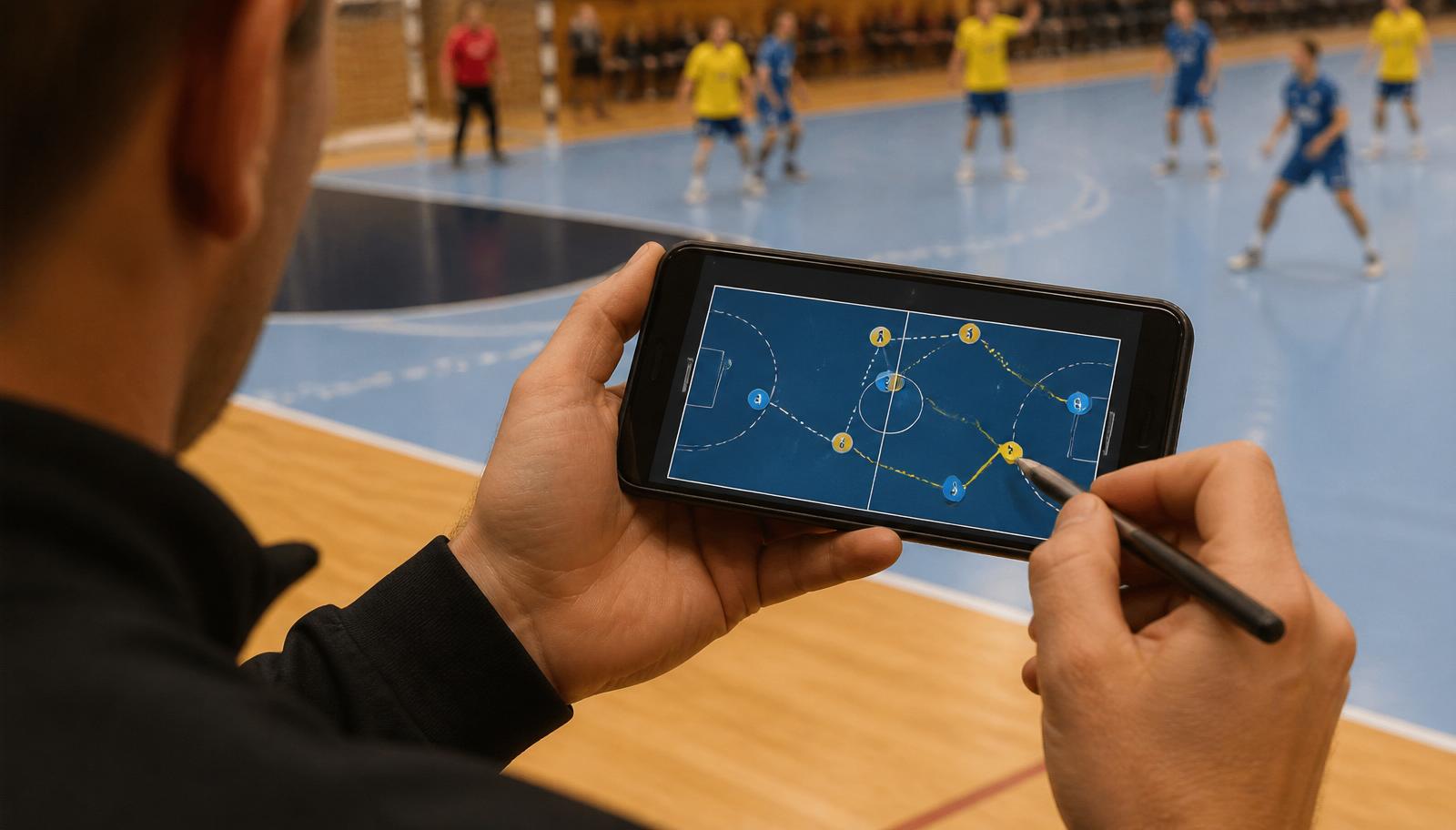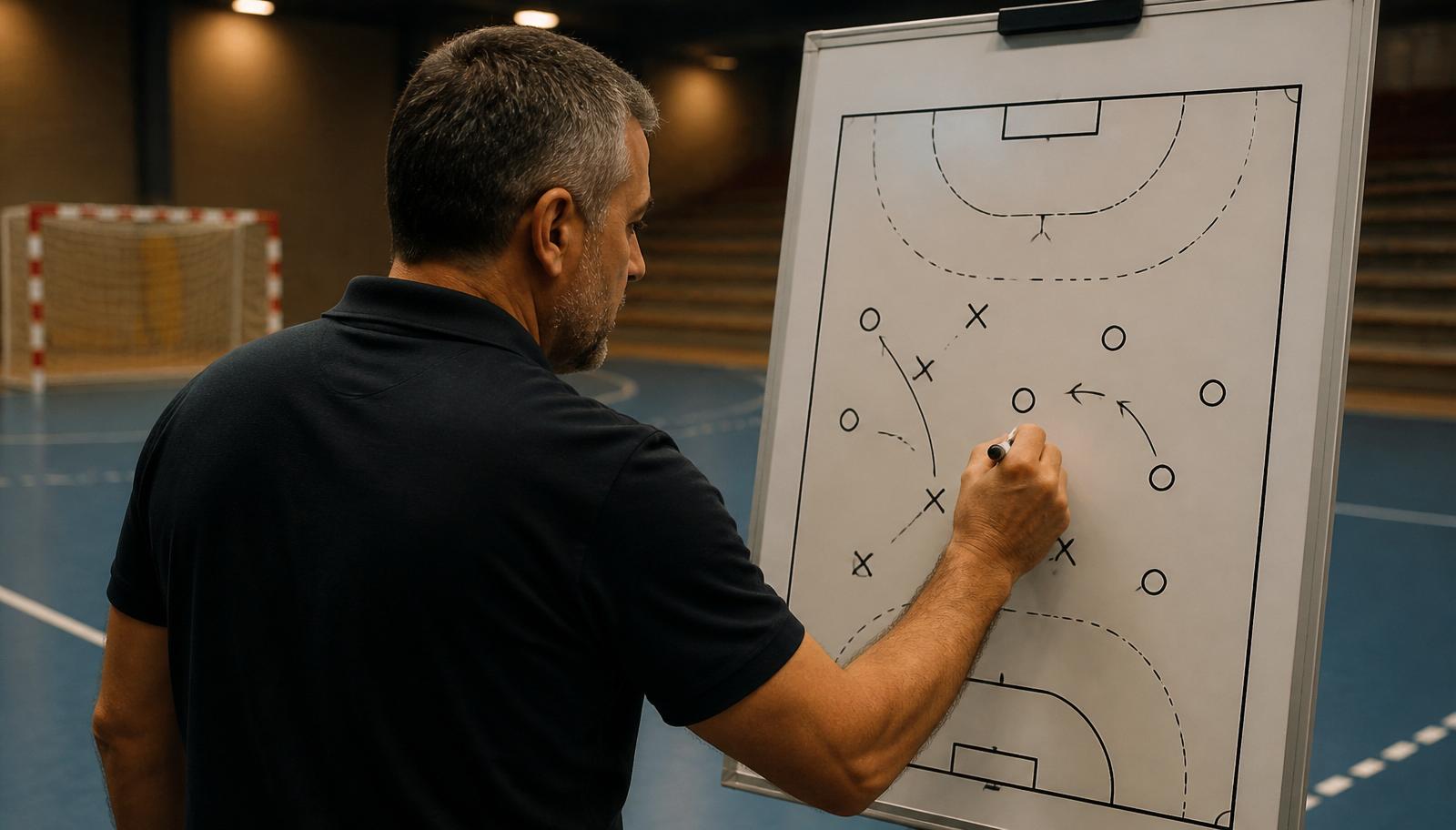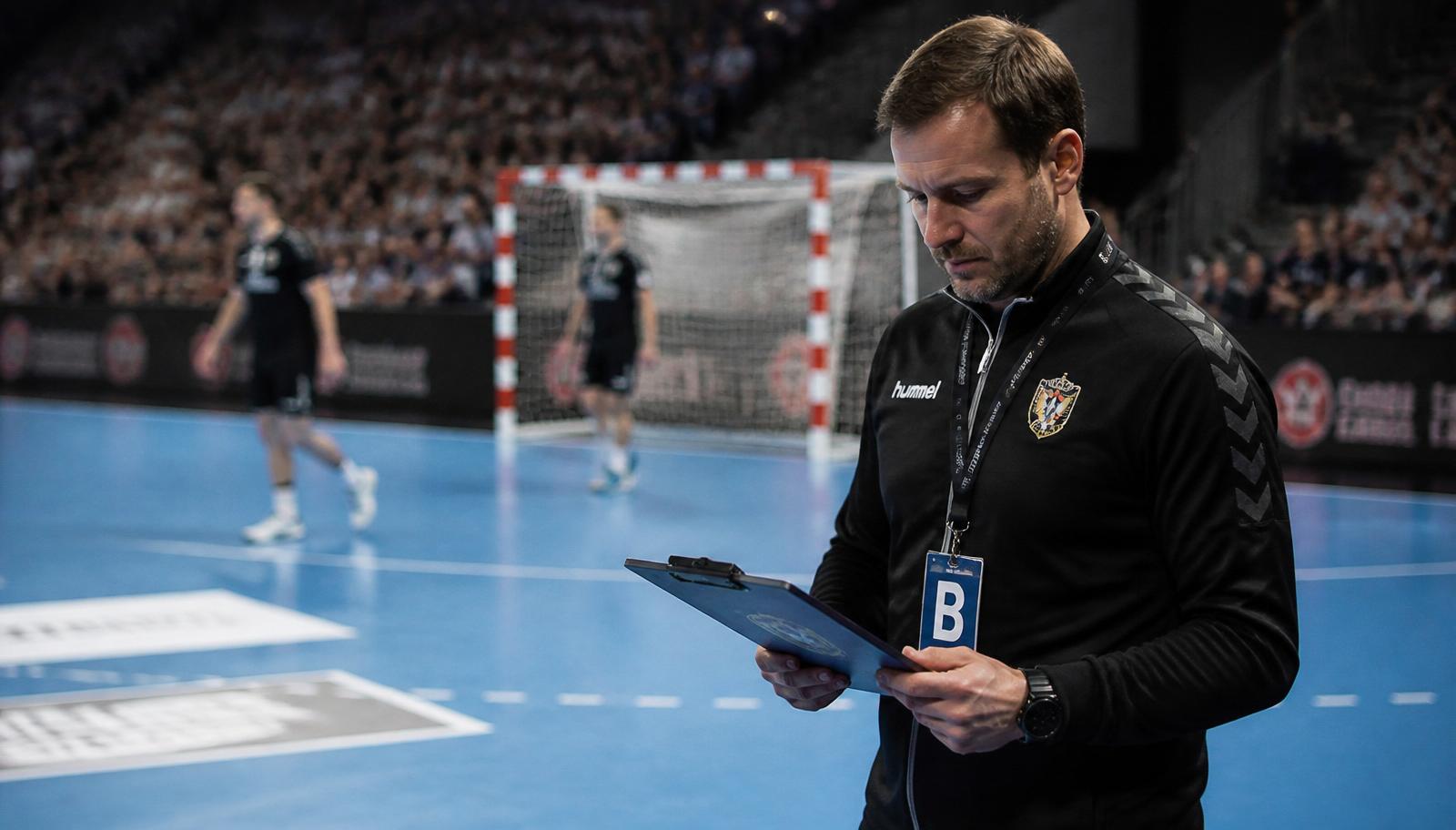
Most handball coaches prepare tactically. They study the opponent, set the defensive system, decide the attacking patterns. That part usually gets done. What often gets skipped is the other half of preparation: the real state of the team about to step on court, which is rarely identical to the plan you made on Tuesday.
Over more than twenty years on the bench, across youth, national team, and Champions League level, I have found that five quick checks before every match catch problems no tactical plan can fix.

1. Physical readiness, today's condition
Your players may be fit in general, but how do they feel right now? There is a real difference between a player who trained well all week and one who slept four hours because of an exam, a family issue, or a bad night. Ask, or better, have them rate energy and body readiness on a simple 1 to 5 scale. Thirty seconds per player, and you learn something you would otherwise discover in the twentieth minute, when someone is moving slower than they should.
What to look for: anyone rating energy or body readiness at 2 or below needs attention. It does not rule them out. It means you should know before throw-off rather than after.
2. Mental focus and stress
A player can be physically ready and mentally elsewhere. Stress from school, work, relationships, or the team itself changes how someone performs under pressure. This is the check most coaches skip, because it feels soft. In my experience a stressed player makes poorer decisions, talks less, and falls back on individual play exactly when the team needs structure.
What to look for: high stress with low focus is a red flag. That player might need a shorter stint, a clearer role, or a short conversation before warmup.
3. Confidence and role clarity
Does each player know exactly what they are expected to do today? Not in general. For this match, against this opponent, in this system. Confidence and tactical clarity are linked. A player unsure of their role plays hesitantly. A player clear on a simple task plays with purpose.
What to look for: if a player rates confidence low, it is worth sixty seconds. Often all it takes is, "Your job today is to control the tempo for the first ten minutes. That is it. Focus on that."
4. Roster reality
This sounds obvious, but coaches walk into matches without fully accounting for who is carrying a small knock, who is back from illness, or who has had a hard week off the court. Before every match, take two minutes to check the roster you actually have today, not the one you planned on Tuesday.
What to look for: late changes, returning players who have not trained fully, anyone who looks off in warmup. Adjust the rotation before you have to react to it mid-set.
5. One execution focus per player
This is the check that changed my coaching most. Instead of giving the team ten things to remember, give each player one specific focus for the match, something concrete rather than a broad goal. "Win your one-on-one on the right side." "Call every switch in defense." "Attack the space after the screen, do not wait." One thing they can measure themselves against.
What to look for: when every player has one focus, the post-match conversation gets simpler. Instead of "how did you play?" you ask "did you execute your focus?" That is a conversation worth having.
The goal of a pre-match check is not more data. It is one fewer surprise in the twentieth minute.
The compound effect
Each check is small on its own. The value comes from running them before every match, season-long, until the patterns surface: which players always rate low on focus and might need a different warmup, which positions report high stress and might need their role expectations adjusted, which readiness signals predicted what actually happened. Over a season this five-minute habit gives you more usable information than hours of video, because readiness data shows you things video never will.
Making it practical
You can run these checks with a notebook and a few questions. That works. The problem is consistency, because it depends entirely on the coach asking the same questions the same way every week. SquadX turns the five checks into a repeatable match-day loop. Players answer on their phone in about ninety seconds, and you get the readiness picture and the red flags before throw-off, without chasing anyone down. Tool or clipboard, the principle holds: know the real state of your team before the whistle.
Five minutes of structured checking beats an hour of wondering, after the final whistle, what went wrong.
Run your pre-match checks in SquadX →
Gintaras Savukynas is co-founder of SquadX and head coach of Bergsøy IL in Norway's Eliteserien. An EHF Master Coach with over 20 years on the bench, he has led the Lithuania national team, won three consecutive trebles with Riihimäen Cocks, and reached the EHF Champions League with both Cocks and HC Motor Zaporizhzhia. SquadX is built on his methodology.