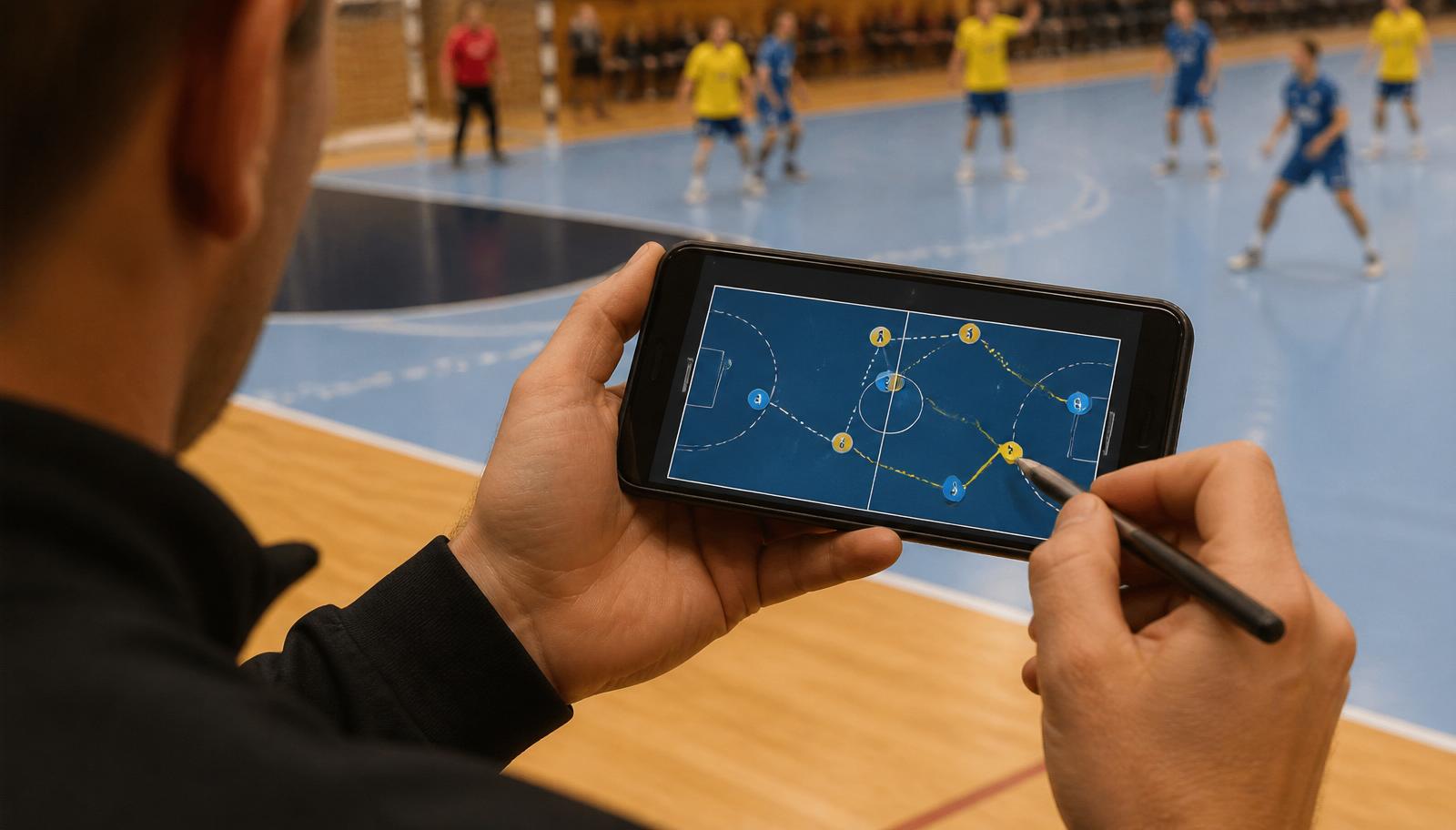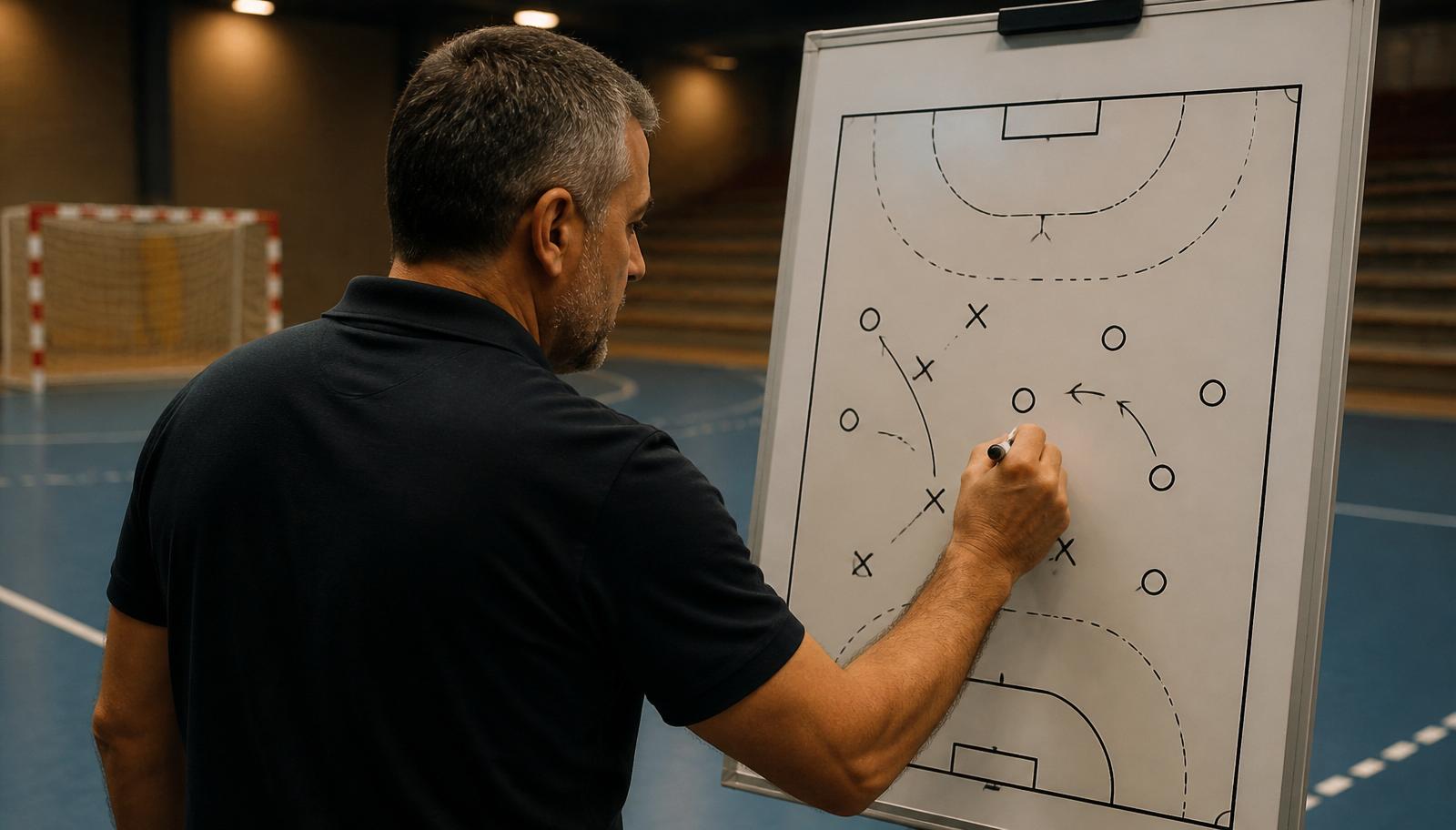
Ask any AI chatbot for a handball training plan and you'll have one in about ten seconds. A warm-up, a main part, a cool-down. The right words in the right order. It looks like something a coach made on a good night.
That's exactly the problem. A handball training plan that looks finished and one that's actually usable are not the same thing, and the gap between them is where most AI tools quietly fall apart. A plan generator and a coaching system can both hand you a session. They are not the same product. Here's how they come apart, on three points that decide whether a plan survives contact with a real week.
A generator answers a prompt. A system reads your situation.
Start with the most basic difference. A generator takes the words you typed and turns them into text. The prompt is all it has. Type "U15 handball session, defence focus" and it writes a tidy U15 defence session, every time, for everyone.
What it can't see is everything around that prompt. It doesn't know your U15s have a match on Saturday, that your two best backs are out, or that you've spent a month building toward one specific defensive shape. So it gives you something that's fine in the abstract and slightly wrong for your actual week. And slightly wrong, repeated every week, is how a season drifts off course.
A coaching system starts from the other end. It already knows the squad, the calendar, the method and the match coming up, and it builds from there. We covered that broad shift in an earlier piece on what AI for handball coaches actually looks like. This is the concrete version: a generic tool sees your prompt, a system sees your team.
A generator invents a drill. A system uses a validated one.
This is the one most coaches don't catch until it bites. When a generator needs a drill, it produces one on the spot, stitched together from whatever pattern fits the words. Sometimes that's fine. Sometimes it hands you a drill that needs nine players when you've got eleven, or two keepers you don't have, or a setup that doesn't actually work on a court. It reads convincingly either way, because reading convincingly is the one thing these tools are genuinely good at. A made-up drill and a real one look identical on the page.
A coaching system doesn't invent the drill. It draws from a library a real coach has already built and checked, tied to a method, sorted by age group and purpose. The drill you get fits the players in front of you and the point of the session, because someone who has actually coached that age group put it there. A plan is only as good as the drills inside it, and "generated on the spot to match a sentence" is a weak base to build a season on.
We saw this directly while building SquadX. Running a four-week U16 pre-season through a generic model, with an EHF Master Coach assessing the output, it called for full-sided 6v6 a squad of eleven outfield players and one keeper couldn't field. It read perfectly. It just couldn't be coached.
A generator forgets. A system remembers.
Ask a generator for next week's session and it starts from zero. No idea what you ran last week, what worked, what you're building toward, or where you sit in the season. Every answer is an island, and in our testing, re-running the identical prompt produced a different plan each time.
That's the deepest gap of the three, because coaching isn't a stack of separate good sessions. It's a sequence. This week builds on last week. The hard block lands in pre-season and eases off before a match. The group moves forward across months, not days. A coaching system carries that thread, so each week connects to the one before it and the one after. A generator optimises a single prompt at a time, which is the one thing a season can never be planned as.
How to actually tell them apart
If you remember one thing from this, make it three questions. Hold any AI tool up against them.
Does it know your team and your calendar, or only the prompt you typed? Are the drills drawn from a method a real coach validated, or invented to fit your words? Does it remember your season and build on it, or start fresh every single time?
If the answers are "only the prompt," "invented," and "starts fresh," you're holding a generator. It can write you a handball training plan. It can't run your season. That isn't a knock on the technology. It's a different tool for a different job, and it helps to know which one you've got before you trust it with twenty kids and a calendar.
Where this leaves you
A generator is genuinely handy for a quick idea on a night you're stuck for one. For a whole season, with real players and a real schedule, you want the thing that knows your team, uses drills you can stand behind, and remembers where you've been.
You can see the difference instead of taking our word for it. Pick your age group and watch a method-grounded plan come together in about a minute at squadx.app/plan-builder. And for the wider read on what's real in AI for handball and what's just marketing, that's what our report is for, sources included.