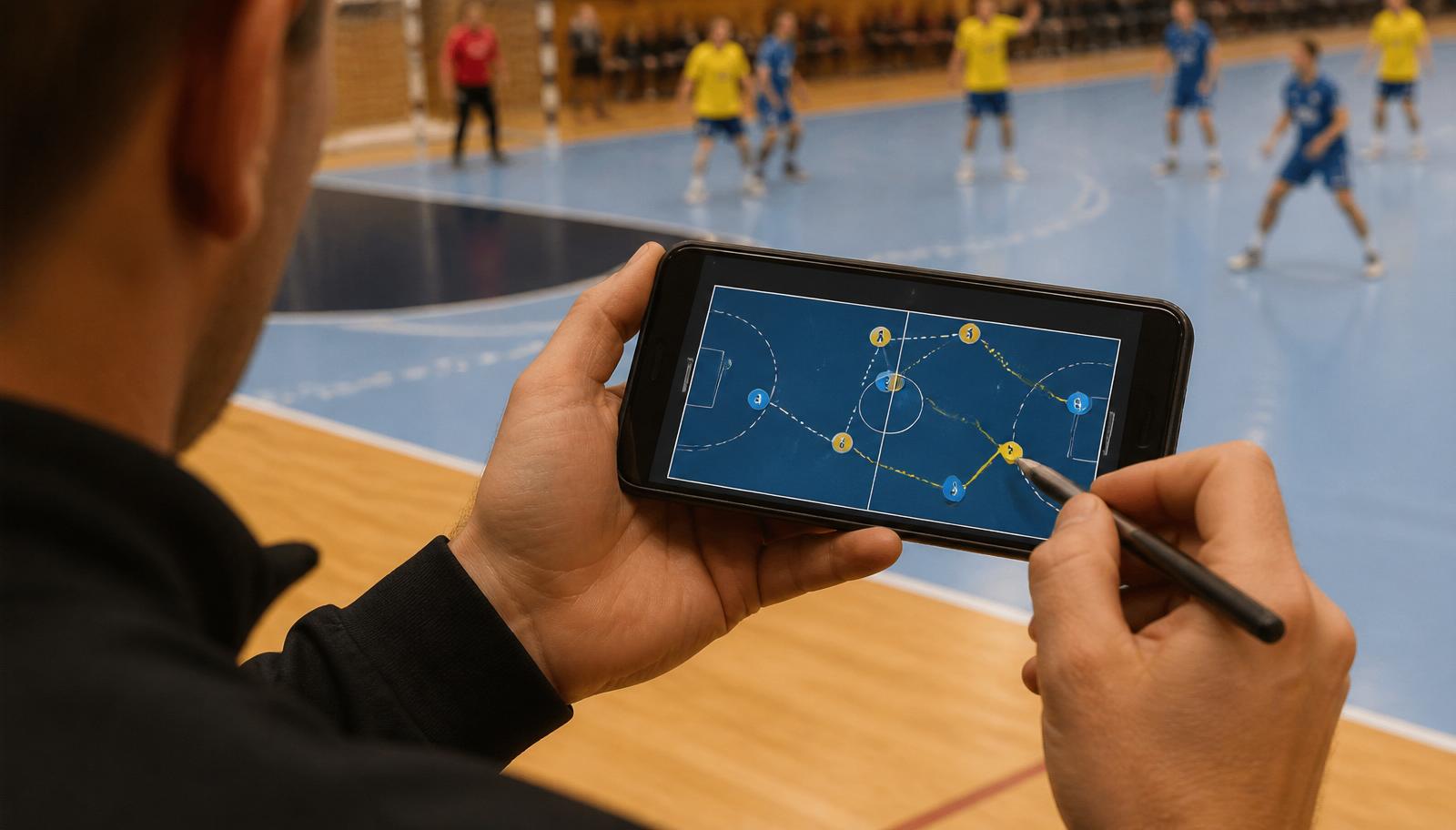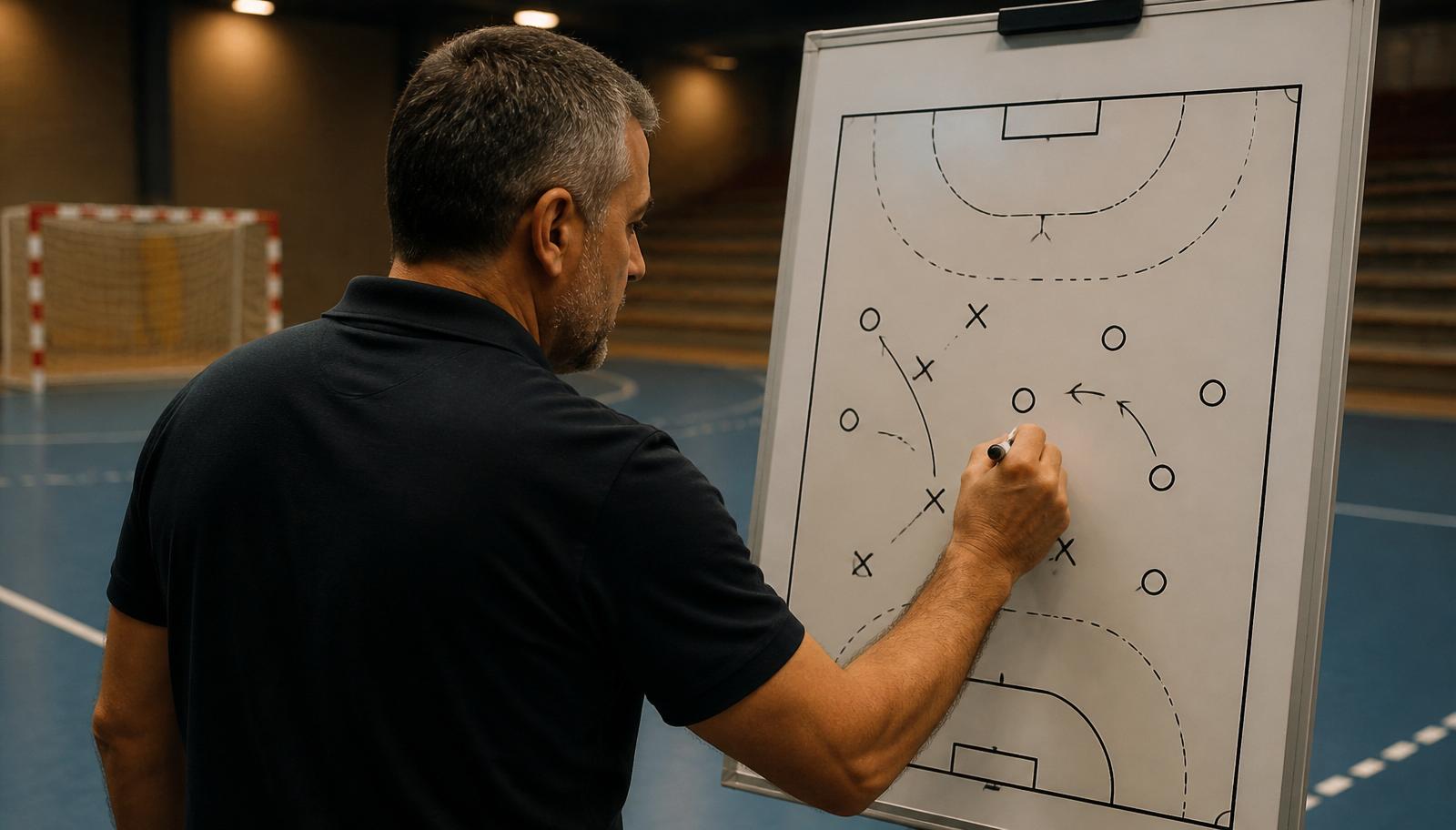
The danger with an AI-generated training plan isn't that it looks wrong. It's that it looks right.
Ask a chatbot for a six-week handball pre-season and you'll get something clean. Sensible headings, a logical-looking build, confident language, the kind of plan you'd happily hand to a parent helper. It reads like a coach with a method wrote it. That's exactly the problem, because reading like a good plan and being one are two different things, and an AI is far better at the first than the second.
These tools are excellent at producing fluent, professional text. That's a real skill, and it isn't the same skill as building a structurally sound training plan. We confuse the two constantly, because we're wired to read confidence as competence. A plan that sounds sure of itself gets trusted. Here's where that trust gets coaches into trouble.
The drills can be invented
The most visible failure first. When a generator needs a drill, it makes one up to fit the words, and a made-up drill reads exactly like a real one. Sometimes you get something that needs nine players when you have eleven, or a setup that doesn't work on a handball court, or a progression that skips the step that actually mattered. The page gives you no signal either way. It looks finished, so you run it.
The plan doesn't know your context
A generated plan assumes a world. A squad size, a hall, equipment, time. It can't know half your group has exams that week, that you share the court with another team on Thursdays, or that three of your players are eleven and built like it. So it writes for a team that doesn't exist and leaves you to spot the mismatches, if you spot them at all.
The load curve is usually wrong
This is the one that does real damage, and almost nobody catches it.
Each session in a generated plan can look fine on its own. The problem shows up across the week and the block, where the tool can't see. Training load has to be managed as a sequence. You build it gradually, you alternate harder and easier days, you leave room to recover. A generator writes one session at a time, so it has no view of the cumulative load it's stacking up. You end up with three demanding sessions back to back, or an intensity that never really builds, or a brutal week dropped on a group three days out from a game. Every session passes inspection. The week is a mess.
Load isn't a property of a session. It's a property of the sequence, and the sequence is the thing a one-prompt-at-a-time tool can't hold.
There's no taper
Closely related, and just as common. The generated plan treats every week the same, right up to match day.
Real planning eases off before a game. You pull the load down so players arrive fresh, because a tired team plays worse and gets hurt more. That's not a nice-to-have. It's the difference between peaking for a match and limping into it. A generator, with no sight of your fixture list and no sense of where you are in the season, will happily run full intensity into Saturday morning. It doesn't know there's a Saturday. Periodization, the whole idea of building in pre-season, holding through the year, and easing off before the games that matter, is invisible to a tool that only ever sees the session in front of it.
None of this is hypothetical. While building SquadX, we ran a four-week U16 pre-season through a generic model and had an EHF Master Coach assess the result. It repeated weeks with no real progression, ran no taper into either friendly, and gave generic running where the brief asked for handball-specific repeated-sprint work. Every session read like a professional wrote it. The block underneath was wrong.
The fluency is the trap
Now set those failures next to how good the writing is, and you see the real risk.
A scrappy, hand-scribbled plan invites scrutiny. You read it carefully because it looks rough. A polished AI plan invites the opposite. It looks authoritative, so you trust it, and the structural problems sail straight through underneath the clean formatting. The better these tools get at sounding like an expert, the worse this gets, not the better. Fluency keeps climbing. Soundness doesn't come along for free. The gap between how right it sounds and how right it is just gets wider, and harder to see.
How to read an AI-generated training plan properly
The fix is to stop judging a plan by how it reads and start judging it by how it's built. Three checks do most of the work.
Does the load build and ease sensibly across the block, or is it flat and random? Is there a taper before matches, or does it run hard into game day? Are the drills real, and right for the squad you actually have? A plan that fails those is broken no matter how clean it looks.
Doing that review takes a coach who knows what they're looking at. The other option is a system where the structure isn't improvised in the first place: load progression, taper and periodization built in as rules the plan has to follow, and drills pulled from a validated library instead of invented on the spot. Not a generator writing freely, but a method the output can't break. That's the line between a plan generator and a coaching system.
Where this leaves you
AI-generated training plans aren't useless. They're a fast first draft. The mistake is treating the draft as the plan and trusting it because it reads well. Check it the way you'd check a plan from a stranger, because that's what it is. Or use something that enforces the structure for you instead of hoping the generator got it right.
You can see what a method-grounded plan looks like, taper and load curve included, at squadx.app/plan-builder. And for the wider picture of what AI in handball does well and where it falls down, that's what our report is for.