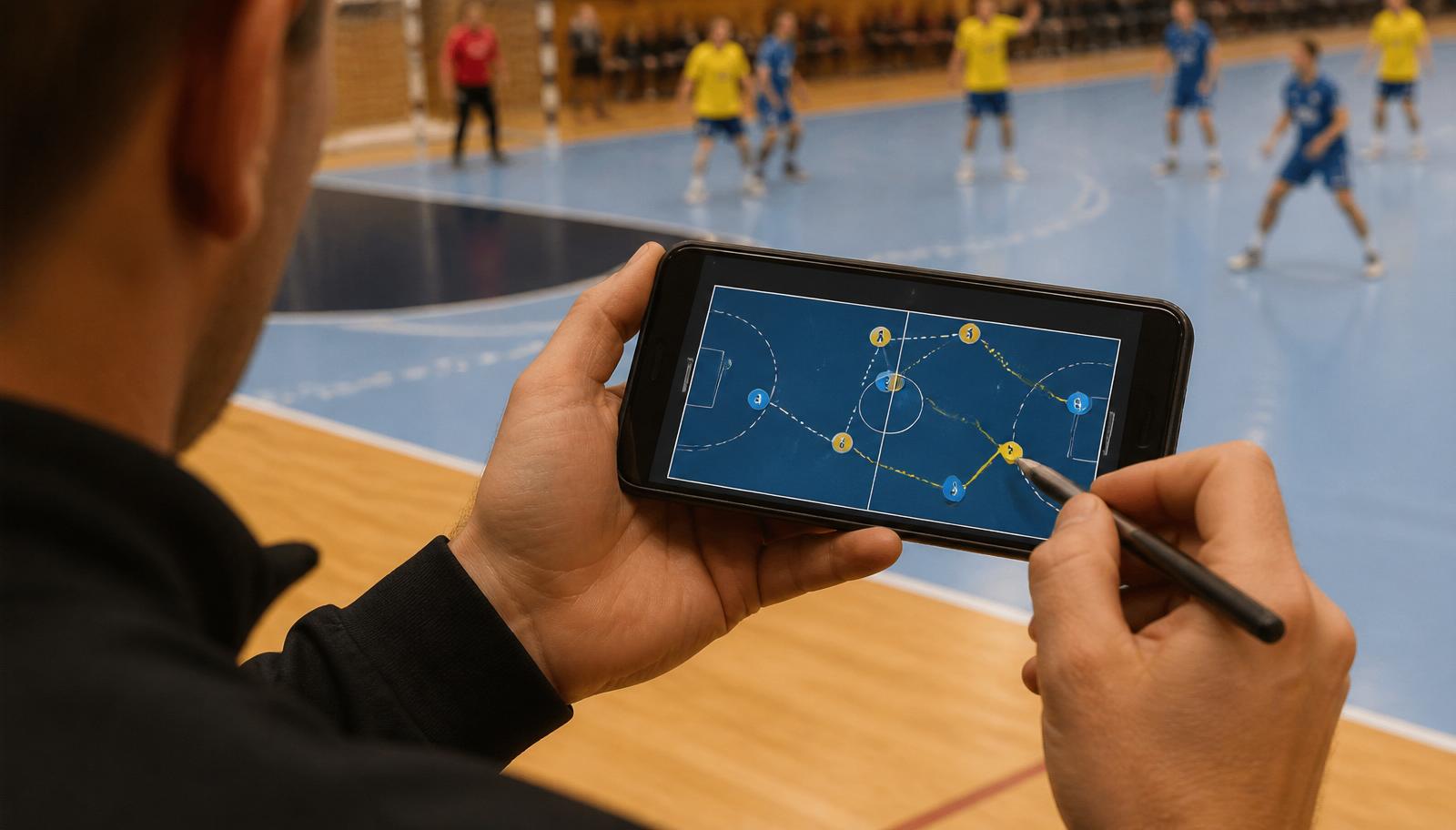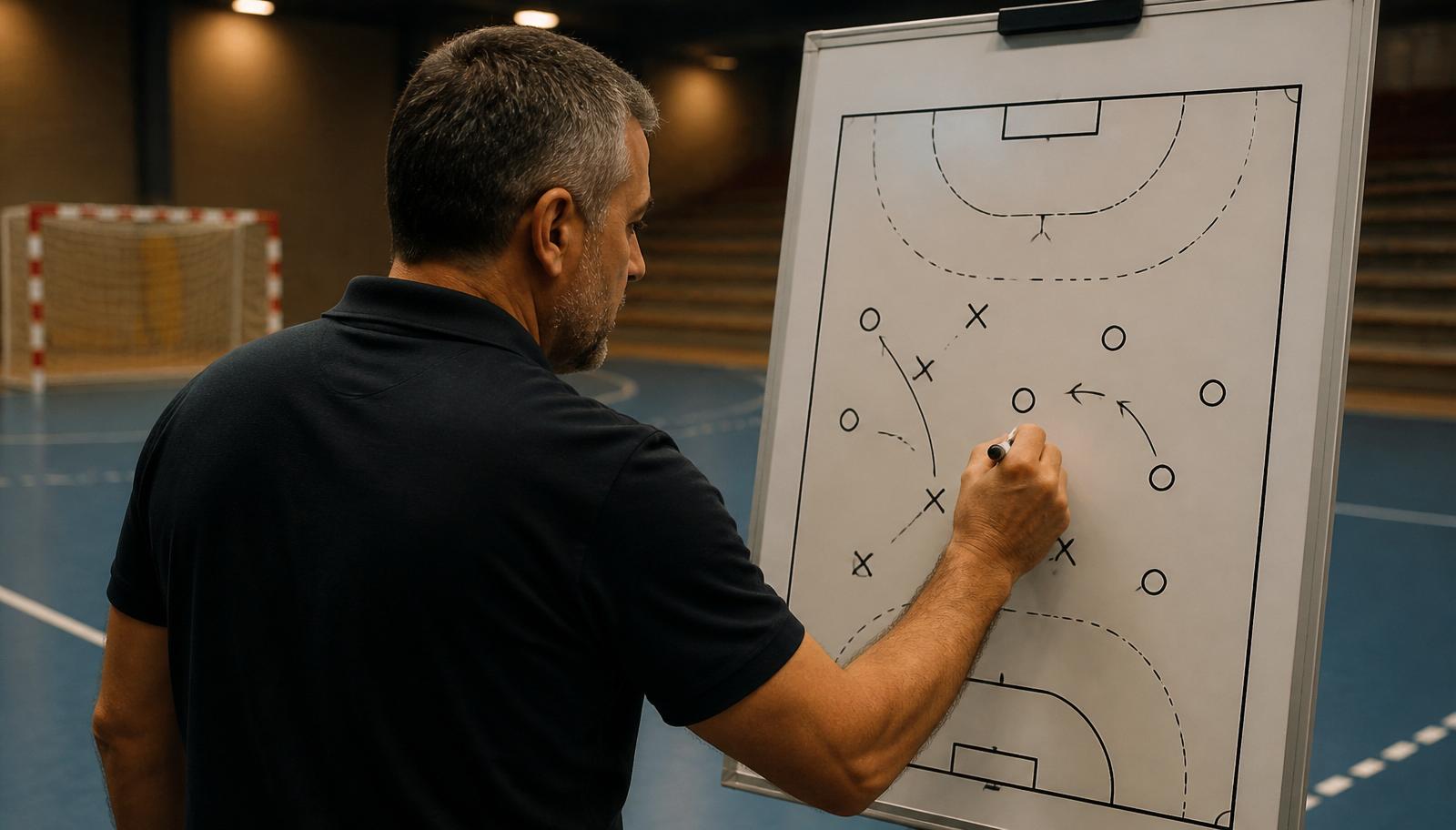
Three days before a friendly, you get word on the opponent. They defend with an aggressive 5–1 and break fast into a 3–3. Your first instinct is to tear up the week and rebuild it around them.
That instinct is wrong. And it's exactly what generic AI does when you ask it for help.
The most valuable thing an assistant can do for a coach isn't writing a new plan. It's adapting the one you already have: changing the single thing that needs to change and leaving everything else alone. Adapting a training plan well is a harder and more useful skill than generating one from scratch, and it's the one that separates a real coaching tool from a clever text generator. Here's why.
Generation is easy, adapting a training plan is hard
Writing a plausible plan from nothing is the easy part. Any decent model can produce a tidy week that reads right. There's no existing structure to respect, so there's nothing to get wrong except the words on the page. That's why it feels so productive and so often isn't.
Adapting is harder, because now there's a plan with reasons behind it. A shape, a load curve, a taper pointing at Saturday. To change it well, you have to know why each part is there, so you know what you're allowed to touch and what you have to protect. The hard part of adaptation isn't the change. It's the restraint. Knowing what not to change is the whole skill.
The 5–1 problem
Back to the opponent. You've built a week that eases down into Saturday's friendly so your players arrive fresh. Now you know they'll face an aggressive 5–1 and a fast 3–3 transition.
What should actually change? One thing. The flexible tactical slot in the middle of the week becomes work against the 5–1, attacking the space the high defender leaves, plus some transition-defence recovery for their fast break. That's it. That's the adaptation.
What must not change? The taper. The load shape. Friday stays a light pre-match activation, not a hard scrimmage. Because the taper was never about the opponent. It's about your players being fresh on Saturday, and that's just as true against a 5–1 as against anyone else. One piece of opponent information doesn't change the physical plan for the week. It changes the emphasis inside one session.
That distinction, what's flexible versus what's load-locked, is the entire game. And it's the exact thing a generator can't see.
What a generator does instead
Ask a generic model to "adapt the plan for this match" and watch it overreact. It rewrites the week. It adds a hard Friday session, because surely more is better. It drops in vague advice to "focus more on tactics." Along the way it quietly destroys the taper, and it has no idea it did, because it never knew the taper was there for a reason.
This is the core failure, and it's the same reason a generator isn't a coaching system. It has no memory of why the plan was built, so it can't tell the load-locked parts from the flexible ones. Faced with new information, it does the only thing it knows: generate again, from scratch, around the newest input. The latest thing in front of it wins, and the careful structure underneath gets flattened.
We saw this directly in testing. Given the same 5–1 scenario, the generic arm regenerated far too much and broke the pre-match taper. Our grounded system changed only the mid-week tactical slot, held the week's load shape, and left Friday as a light activation. It reached roughly ninety per cent of the final plan, and an EHF Master Coach finished it, swapping in a backcourt-pivot combination he favours and adding a defensive communication cue. The value wasn't a new plan. It was knowing what to leave alone.
Why this matters more with young players
For a youth team the stakes on this are higher, not lower. A careful week is often built around managing growing bodies and a long development plan, not just the next result. Blowing it up because of one opponent is how you cook a group of teenagers and trade months of patient work for a friendly that won't matter in a fortnight.
So "change the emphasis, protect the load" is a development safeguard as much as a coaching one. There are calls a tool simply shouldn't make on its own here, and "should we sacrifice the taper and the plan to chase one opponent" sits near the top of the list. That stays a coach's decision, made with the whole season in view, not an AI's reflex to the most recent input.
What you actually want
When something changes mid-week, and something always does, you don't want a tool that rewrites everything. You want one that knows the plan well enough to change the right block and guard the rest. That's adaptation, and it's a different and harder thing than generation, which is why so few tools actually do it.
You can see the planning side of this at squadx.app/plan-builder, a method-grounded plan built for your age group. We've also written about the hidden risk of trusting a plan generated from scratch, and the full report lays out where AI in handball genuinely helps today, with the sources behind it.